

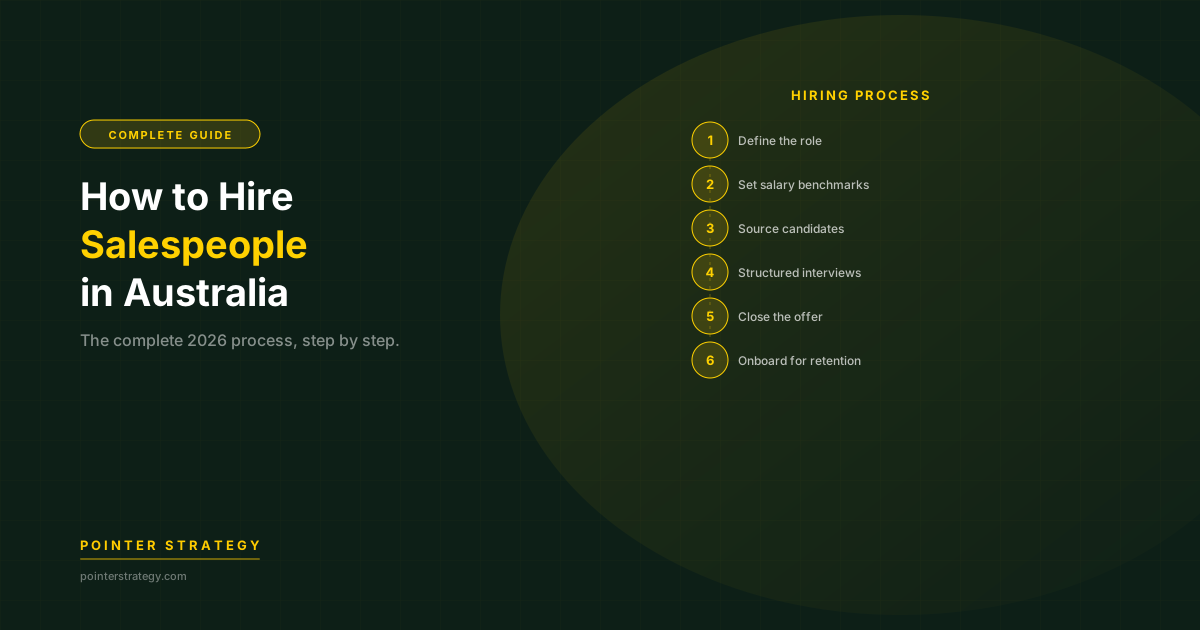
Hiring salespeople in Australia in 2026 costs between $25,000 and $150,000 per hire when you factor in recruitment fees, onboarding, ramp time, and the risk of getting it wrong. The process typically takes 40 to 60 days for mid-level roles and 60 to 90 days for leadership positions. This guide walks through the complete hiring process step by step, with salary benchmarks, sourcing strategies, interview frameworks, and the mistakes that cause 30 to 40% of sales hires to fail within 12 months.
Whether you are hiring your first BDR or building an entire go-to-market team, the fundamentals are the same: define the role precisely, source from the right channels, assess for capability rather than credentials, and invest in onboarding from day one.
Step 1: Define the Role Before You Start Sourcing
Most failed sales hires trace back to a vague job description. "We need a salesperson" is not a brief. Before you post anything or call an agency, answer these questions.
What stage is your sales motion?
The skills that win in a founder-led outbound environment are completely different from those needed in an enterprise team with inbound demand, SDR support, and solutions engineers. A rep who thrived at Salesforce with a recognised brand, warm leads, and a support team will struggle at a Series A startup where they need to cold-prospect, demo, negotiate, and close all in the same week.
What does quota attainment look like?
Define the revenue target, average deal size, sales cycle length, and win rate before you hire. If you cannot articulate what success looks like in the first 90 days, you are not ready to hire.
What is the realistic OTE?
Underpaying relative to market guarantees you will attract B and C players. Use current salary benchmarks to calibrate your offer against the market.
Step 2: Understand 2026 Salary Expectations
Australian sales salaries have increased 8 to 15% since 2023 depending on role level and city. Here are the current ranges.
| Role | Base Salary (AUD) | OTE (AUD) | Commission Split |
|---|---|---|---|
| SDR / BDR | $55,000 to $75,000 | $75,000 to $100,000 | 70/30 to 75/25 |
| Account Executive (Mid-Market) | $90,000 to $130,000 | $130,000 to $200,000 | 50/50 to 60/40 |
| Account Executive (Enterprise) | $130,000 to $170,000 | $200,000 to $280,000 | 50/50 |
| Sales Manager | $140,000 to $180,000 | $200,000 to $260,000 | 60/40 to 70/30 |
| Head of Sales / VP Sales | $180,000 to $250,000 | $250,000 to $350,000 | 70/30 |
| CRO / Chief Sales Officer | $220,000 to $300,000 | $300,000 to $450,000+ | 70/30 to 80/20 |
Sydney typically commands a 5 to 15% premium over Melbourne. Brisbane and Perth are 10 to 20% below Sydney for equivalent roles. For the full city-by-city breakdown, see the sales salary benchmarks for Australia 2026.
Use the OTE calculator to model different base/variable splits and see how your offer compares.
Step 3: Choose Your Sourcing Channel
Internal Referrals
Still the highest-quality, lowest-cost channel. Referred hires have 25% higher retention rates and 15% faster ramp times. Offer a meaningful referral bonus ($3,000 to $5,000) and make the process frictionless.
Direct Sourcing (LinkedIn, Seek, Job Boards)
Works well for BDR and mid-level AE roles where the candidate pool is large. Budget $5,000 to $15,000 in recruiter time and advertising. The downside: you are competing with every other company posting the same role, and the best salespeople are rarely actively job-seeking.
Specialist Sales Recruitment Agency
For roles where quality matters more than speed, or where you lack internal recruiting capability. Traditional contingency agencies charge 15 to 25% of base salary upfront. Pointer's pay-on-performance model charges 1.5% of annual salary monthly, with no upfront fee and billing that stops if the hire leaves.
Executive Search (Retained)
For VP, CRO, and other senior leadership roles. Expect to pay 25 to 35% of first-year total compensation, with a portion upfront. Typically used when confidentiality matters or the candidate pool is extremely small.
Step 4: Build a Structured Interview Process
Unstructured interviews are barely better than coin flips at predicting job performance. Here is a four-stage process that actually works.
Stage 1: Screening (20 minutes, phone or video)
Filter for basics: motivation, salary expectations, relevant experience, communication skills. Disqualify early to protect everyone's time.
Stage 2: Skills Assessment (60 minutes)
This is where most companies fail. Instead of asking "Tell me about a time you closed a big deal," simulate the actual work.
Stage 3: Deep Dive (60 minutes, hiring manager)
Explore track record in detail. Ask for specific numbers: quota attainment percentage, deal sizes, win rates, pipeline generation methods. Verify claims in the next stage.
Stage 4: Reference Checks
Call the candidate's previous managers (not just the references they provide). Ask: "Would you hire this person again? Why or why not?" and "What environment do they thrive in versus struggle?"
Step 5: Close the Offer Without Overpaying
Move Fast
Top candidates in the Australian market receive multiple offers. If your process takes six weeks from first interview to offer, you will lose the best people. Target two weeks from first conversation to written offer.
Lead with the Total Package
OTE, superannuation (11.5%), equity if applicable, training budget, flexibility, and career path. Many candidates will accept 5 to 10% less base if the total package and growth opportunity are strong.
Include Enablement in the Pitch
Candidates who know they will receive ongoing sales training and coaching are more likely to accept and more likely to stay. Pointer placements include 12 months of live training, which becomes a competitive advantage in offer negotiations.
Step 6: Onboard for Retention, Not Just Ramp
The number one predictor of sales hire retention is the quality of the first 90 days. Companies with structured onboarding see 82% higher retention.
Week 1: Context, Not Calls
Product deep-dive, ICP training, CRM setup, shadowing existing reps. No quota pressure.
Weeks 2 to 4: Guided Activity
Supervised prospecting, coached discovery calls, regular 1:1s with manager. Review calls together daily.
Weeks 5 to 8: Measured Ramp
Own pipeline generation with clear weekly metrics. Manager shifts from directing to coaching.
Months 3 to 6: Full Ownership
Full territory, full quota (ramped). Weekly coaching continues. This is where most companies stop paying attention, and where most failures become visible.
Common Mistakes That Kill Sales Hiring
Mistake 1: Hiring for Industry, Not Sales Capability
A rep who sold payroll software is not automatically the right person to sell your HR tech platform. Sales capability (discovery, objection handling, closing, prospecting) transfers across industries. Product knowledge can be taught in weeks. Sales DNA cannot.
Mistake 2: Skipping the Role-Play
If you do not see the candidate sell during the interview process, you are guessing. Every sales hire should do a live role-play that simulates their actual day-to-day work.
Mistake 3: Offering Below Market
Check current salary data before setting your budget. A lowball offer attracts desperate candidates, not strong ones. The cost of hiring the wrong person at a discount far exceeds the cost of paying market rate for the right one.
Mistake 4: No Onboarding Plan
"Figure it out" is not onboarding. Without a structured ramp plan, even talented reps take twice as long to produce, and many never get there at all.
Mistake 5: Using a Generalist Recruiter for a Specialist Role
Generalist agencies fill volume roles. Sales hiring requires recruiters who understand quota-carrying roles, commission structures, and what actually predicts performance. Work with specialists who have done the job.
When to Hire Versus Outsource
Not every company needs a full-time sales team immediately. Consider the alternatives.
| Scenario | Best Option |
|---|---|
| Pre-product-market-fit | Founder sells directly |
| $500K to $1.5M ARR | First sales hire (AE) |
| $1M to $3M ARR, no sales leader | Fractional sales leadership |
| Scaling from 3 to 10 reps | Full-time sales manager + recruitment partner |
| Entering new market | Contract or fractional AE to test before committing |
Timeline: What a Realistic Hiring Process Looks Like
| Week | Activity |
|---|---|
| Week 1 | Finalise role scope, compensation, job description |
| Week 2 | Activate sourcing channels (agency, direct, referrals) |
| Weeks 3 to 5 | Screen and interview candidates |
| Week 6 | Final interviews, reference checks, offer |
| Week 7 | Offer acceptance, notice period begins |
| Weeks 8 to 12 | Notice period (4 weeks typical in Australia) |
| Weeks 12+ | Onboarding and ramp |
Total time from decision to productive rep: 4 to 6 months minimum. Plan accordingly.