

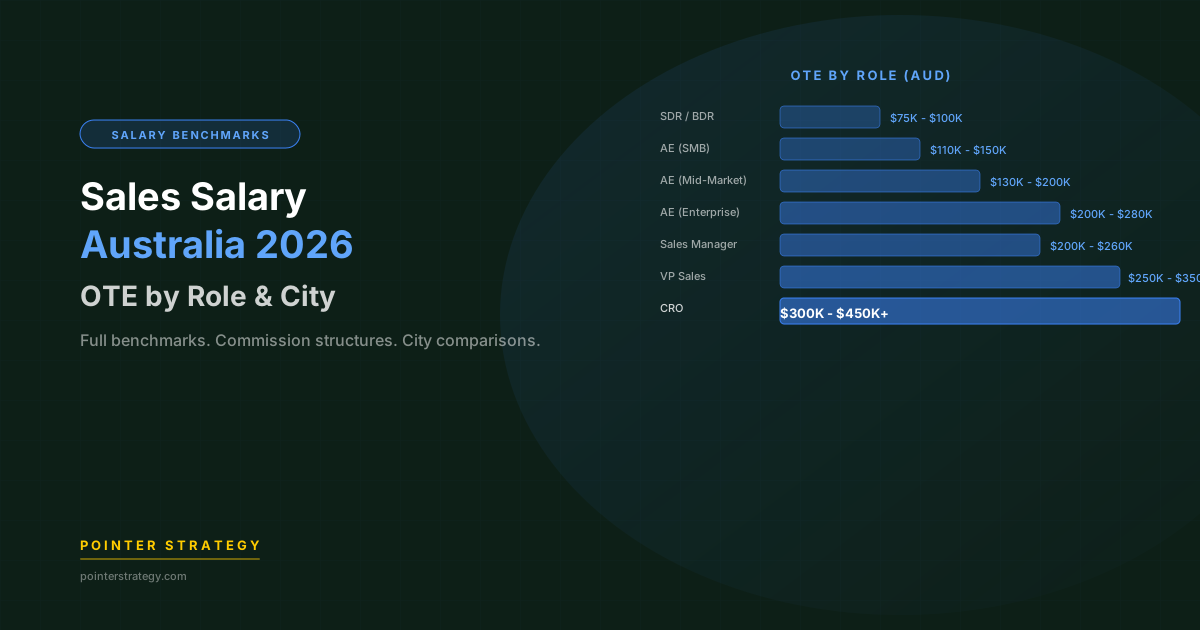
Australian sales salaries in 2026 have risen 8 to 15% compared to 2023 across all role levels. SDR and BDR roles now pay $75,000 to $100,000 OTE. Mid-market Account Executives earn $130,000 to $200,000 OTE. Enterprise AEs command $200,000 to $280,000 OTE. Sales leadership roles (Head of Sales, VP, CRO) sit between $220,000 and $450,000+ OTE depending on company size and scope.
This guide provides comprehensive salary benchmarks for every major sales role in Australia, broken down by city, experience level, industry, and commission structure. Whether you are hiring salespeople, negotiating your own compensation, or benchmarking your team against the market, these numbers reflect the current reality of the ANZ talent market.
For interactive salary data and filtering, visit the sales salary dashboard.
Summary Table: Sales Salaries Australia 2026
| Role | Base Salary (AUD) | OTE (AUD) | Typical Split |
|---|---|---|---|
| SDR / BDR | $55,000 to $75,000 | $75,000 to $100,000 | 70/30 to 75/25 |
| Account Executive (SMB) | $75,000 to $100,000 | $110,000 to $150,000 | 55/45 to 60/40 |
| Account Executive (Mid-Market) | $90,000 to $130,000 | $130,000 to $200,000 | 50/50 to 60/40 |
| Account Executive (Enterprise) | $130,000 to $170,000 | $200,000 to $280,000 | 50/50 |
| Account Manager | $85,000 to $120,000 | $110,000 to $160,000 | 65/35 to 70/30 |
| Sales Engineer / Solutions Consultant | $130,000 to $170,000 | $160,000 to $220,000 | 75/25 to 80/20 |
| Sales Manager | $140,000 to $180,000 | $200,000 to $260,000 | 60/40 to 70/30 |
| Head of Sales | $160,000 to $220,000 | $220,000 to $320,000 | 65/35 to 70/30 |
| VP of Sales | $180,000 to $250,000 | $250,000 to $350,000 | 70/30 |
| CRO / Chief Sales Officer | $220,000 to $300,000 | $300,000 to $450,000+ | 70/30 to 80/20 |
All figures are in AUD and include superannuation in the base component. OTE assumes 100% quota attainment.
Use the OTE calculator to model different scenarios and see how specific packages compare.
SDR / BDR Salaries ($75,000 to $100,000 OTE)
Sales Development Representatives and Business Development Representatives are the entry point into professional sales. These roles focus on outbound prospecting, lead qualification, and booking meetings for Account Executives.
2026 Benchmarks
| Experience Level | Base (AUD) | OTE (AUD) | Commission Split |
|---|---|---|---|
| Entry (0 to 12 months) | $55,000 to $62,000 | $75,000 to $85,000 | 75/25 |
| Experienced (1 to 2 years) | $62,000 to $70,000 | $85,000 to $95,000 | 70/30 |
| Senior / Team Lead | $68,000 to $78,000 | $95,000 to $105,000 | 70/30 |
Commission Structure
BDR commissions are typically tied to meetings booked that convert to qualified opportunities, or sometimes to pipeline generated. The most common structures:
City Comparison (BDR, Experienced)
| City | Base (AUD) | OTE (AUD) |
|---|---|---|
| Sydney | $65,000 to $72,000 | $90,000 to $100,000 |
| Melbourne | $60,000 to $68,000 | $85,000 to $95,000 |
| Brisbane | $55,000 to $63,000 | $78,000 to $88,000 |
| Perth | $58,000 to $65,000 | $80,000 to $90,000 |
| Adelaide | $52,000 to $60,000 | $72,000 to $82,000 |
Account Executive Salaries ($110,000 to $280,000 OTE)
Account Executives are the closers. Compensation varies significantly based on market segment (SMB, mid-market, enterprise), industry, and deal complexity.
SMB AE ($110,000 to $150,000 OTE)
Selling to small businesses with deal sizes of $5,000 to $30,000 ARR. High volume, shorter sales cycles (2 to 6 weeks), often product-led.
| Experience | Base (AUD) | OTE (AUD) |
|---|---|---|
| Junior (0 to 2 years closing) | $75,000 to $85,000 | $110,000 to $130,000 |
| Experienced (2 to 4 years) | $85,000 to $100,000 | $130,000 to $150,000 |
Mid-Market AE ($130,000 to $200,000 OTE)
Selling to companies with 50 to 500 employees. Deal sizes of $30,000 to $150,000 ARR. Sales cycles of 1 to 4 months. Multiple stakeholders.
| Experience | Base (AUD) | OTE (AUD) |
|---|---|---|
| Standard (2 to 4 years closing) | $90,000 to $110,000 | $130,000 to $170,000 |
| Senior (4 to 7 years) | $110,000 to $130,000 | $170,000 to $200,000 |
Enterprise AE ($200,000 to $280,000 OTE)
Selling to large organisations (500+ employees or $100M+ revenue). Deal sizes of $100,000 to $1M+ ARR. Sales cycles of 3 to 12 months. Complex procurement.
| Experience | Base (AUD) | OTE (AUD) |
|---|---|---|
| Standard (4 to 7 years enterprise) | $130,000 to $150,000 | $200,000 to $240,000 |
| Senior (7+ years, named accounts) | $150,000 to $170,000 | $240,000 to $280,000 |
AE City Comparison (Mid-Market, Experienced)
| City | Base (AUD) | OTE (AUD) |
|---|---|---|
| Sydney | $115,000 to $135,000 | $175,000 to $205,000 |
| Melbourne | $105,000 to $125,000 | $165,000 to $195,000 |
| Brisbane | $95,000 to $115,000 | $145,000 to $175,000 |
| Perth | $100,000 to $120,000 | $150,000 to $180,000 |
| Remote (AU-based) | $100,000 to $125,000 | $155,000 to $190,000 |
Sales Leadership Salaries ($220,000 to $450,000+ OTE)
Leadership compensation varies dramatically based on team size, company revenue, and scope of responsibility.
Sales Manager ($200,000 to $260,000 OTE)
First-line managers who coach and lead a team of 4 to 8 reps. Often still carry a small personal quota (10 to 20% of team target).
| Context | Base (AUD) | OTE (AUD) |
|---|---|---|
| Small team (4 to 6 reps) | $140,000 to $160,000 | $200,000 to $230,000 |
| Large team (6 to 10 reps) | $155,000 to $180,000 | $230,000 to $260,000 |
Head of Sales ($220,000 to $320,000 OTE)
Owns the sales function. Manages managers or a team of 8 to 15+ reps. Responsible for process, hiring, and revenue targets.
| Company Size | Base (AUD) | OTE (AUD) |
|---|---|---|
| $2M to $5M ARR | $160,000 to $190,000 | $220,000 to $270,000 |
| $5M to $15M ARR | $180,000 to $220,000 | $270,000 to $320,000 |
VP of Sales ($250,000 to $350,000 OTE)
Strategic leader who builds and scales the sales organisation. Reports to CEO or CRO.
| Company Size | Base (AUD) | OTE (AUD) |
|---|---|---|
| $5M to $15M ARR | $180,000 to $220,000 | $250,000 to $300,000 |
| $15M to $50M ARR | $210,000 to $250,000 | $300,000 to $350,000 |
CRO ($300,000 to $450,000+ OTE)
Owns all revenue: sales, marketing alignment, CS revenue, partnerships.
| Company Size | Base (AUD) | OTE (AUD) |
|---|---|---|
| $10M to $30M ARR | $220,000 to $270,000 | $300,000 to $380,000 |
| $30M to $100M+ ARR | $260,000 to $320,000 | $380,000 to $450,000+ |
Equity is common at the VP and CRO level, typically 0.25% to 2% of the company depending on stage. For detailed guidance on what to hire and when, see When to Hire Your First VP of Sales.
Commission Structures in Australia
The Standard Split
The most common commission structure in Australian B2B sales is 50/50 (50% base, 50% variable) for AE roles and 70/30 for leadership. Entry-level roles (SDR/BDR) typically use 70/30 to 75/25 to provide more income stability.
Accelerators and Decelerators
| Structure Element | Common Range |
|---|---|
| At-plan commission rate | 8 to 12% of revenue closed |
| Accelerator (above 100% quota) | 1.2x to 2x rate |
| Decelerator (below threshold) | 0.5x to 0.8x rate below 70% attainment |
| Annual / quarterly bonus | 5 to 15% of base for exceeding targets |
Draw vs No Draw
Most Australian sales roles include a "draw" (guaranteed base) with commissions paid monthly or quarterly on top. True commission-only (1099-style) roles are rare in Australia and generally limited to real estate, insurance, and some financial services.
For more detail on structuring commission plans, see the APAC sales compensation guide.
Industry Premiums
Not all sales roles pay equally. Industry context significantly affects compensation.
| Industry | Premium vs Average | Notes |
|---|---|---|
| Enterprise SaaS | +10 to 20% | Highest-paying segment, complex sales |
| Cybersecurity | +15 to 25% | Severe talent shortage, specialised knowledge |
| Fintech / Payments | +10 to 15% | Regulatory complexity, high deal values |
| Martech / Adtech | 0 to +5% | Crowded market, moderate deal sizes |
| HR Tech | 0 to +5% | Growing segment, competitive hiring |
| Hardware / Manufacturing | -5 to -10% | Longer cycles, lower margins |
| Telco / MSP | -10 to -15% | Commoditised, volume-based |
Startup vs Enterprise Employer
Early-stage startups (Seed to Series B) typically pay 5 to 15% below market on base salary but compensate with equity, faster promotion paths, and broader scope. Enterprise employers (publicly listed, 1000+ employees) pay at or above market on cash compensation but offer less equity and slower career progression.
What Drives Salary Negotiations
Factors That Increase an Offer
Factors That Limit an Offer
How to Benchmark Your Offer
Use the salary benchmark tool to compare a specific role against current market data. For hiring managers, offering below the 25th percentile will attract weak candidates. Offering above the 75th percentile will generate strong interest but may not be necessary. The sweet spot for most roles is between the 50th and 75th percentile.
Salary Trends: What Changed from 2023 to 2026
| Trend | Impact |
|---|---|
| AI tools increasing rep productivity | Slight downward pressure on headcount, upward pressure on per-rep comp |
| Remote/hybrid becoming standard | Reduced city premium for remote-eligible roles |
| Superannuation increase (11% to 11.5%) | Employers absorbing, not reducing base |
| Talent shortage in enterprise sales | 10 to 15% premium for proven enterprise closers |
| Revenue enablement becoming standard | Companies with training programs attract better talent at similar comp |
| Startup funding recovery | Series B+ companies returning to aggressive hiring with competitive packages |
The biggest shift: companies that include structured revenue enablement in their offer are winning candidates at 5 to 10% lower base salary, because reps value development and career growth alongside cash compensation.