

A bad sales hire doesn't just cost you a salary. It costs you the deals they didn't close, the customers they mishandled, the pipeline they never built, and the months you spent hoping things would turn around.
Most companies estimate this damage at 30 to 50% of the rep's base salary. The real number is closer to 3 to 5x their total compensation once you account for everything that goes wrong. For a rep earning $120K base with $200K OTE, that means the true cost of a failed hire can land between $600K and $1M.
This guide breaks down exactly where those costs come from (direct, indirect, and opportunity) and what you can do to stop repeating the same expensive mistake.
How Much Does a Bad Sales Hire Actually Cost
The headline number depends on what you count. Most HR calculations focus on direct costs: recruitment fees, salary paid, and severance. That gives you the 30 to 150% of base salary figure that gets cited in every hiring article.
But sales roles carry a unique multiplier: every month a bad rep sits in a territory, they're not just failing to generate revenue. They're actively destroying future pipeline. Prospects who get a bad first impression don't come back. Accounts that go unworked for six months get poached by competitors. Internal trust in the sales function erodes.
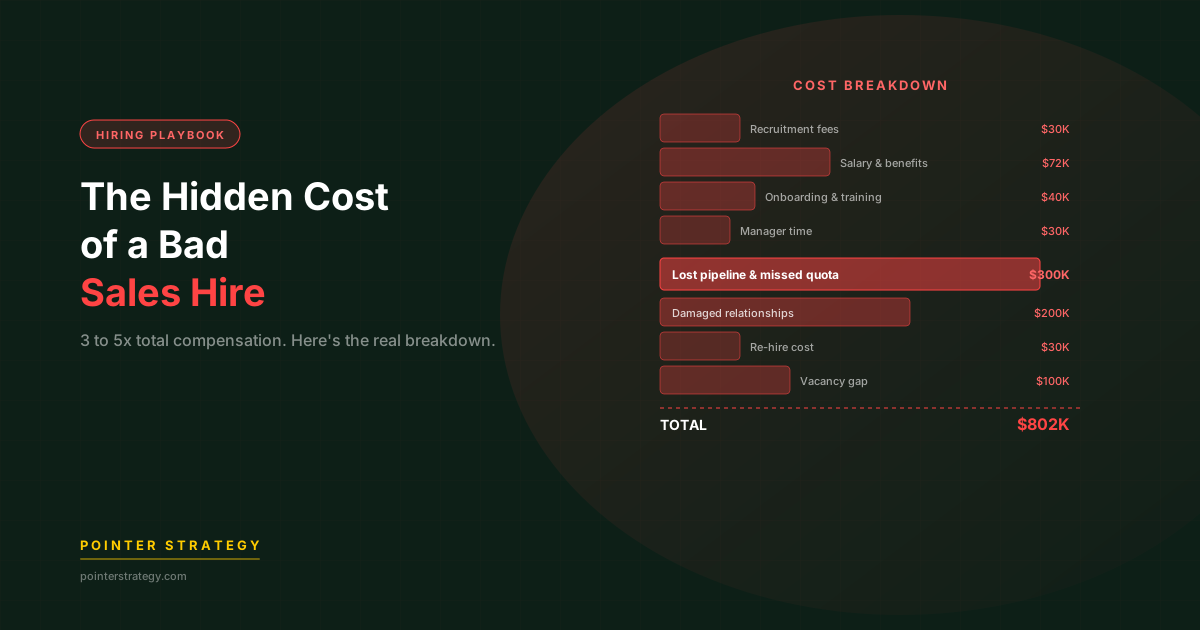
Here's what the full cost breakdown actually looks like for a rep on $120K base / $200K OTE who fails at month six:
| Cost Category | Conservative Estimate | Realistic Estimate |
|---|---|---|
| Recruitment fees (traditional agency) | $18,000 to $30,000 | $18,000 to $30,000 |
| Salary & benefits paid (6 months) | $72,000 | $72,000 |
| Onboarding & training time | $15,000 to $25,000 | $25,000 to $40,000 |
| Manager time (coaching, PIPs, exit) | $10,000 to $15,000 | $20,000 to $30,000 |
| Lost pipeline & missed quota | $50,000 to $100,000 | $150,000 to $300,000 |
| Damaged customer relationships | Hard to quantify | $50,000 to $200,000 |
| Re-hire cost (doing it all again) | $18,000 to $30,000 | $18,000 to $30,000 |
| Vacancy cost (2 to 3 months to backfill) | $30,000 to $50,000 | $50,000 to $100,000 |
| Total | $213,000 to $322,000 | $403,000 to $802,000 |
The conservative estimate already exceeds the rep's base salary. The realistic estimate, which accounts for the compounding effects of lost pipeline and damaged relationships, sits squarely in the 3 to 5x range.
The Direct Costs You Can Measure
These are the line items that show up on a spreadsheet. They're real, they're significant, and they're the reason finance teams wince every time a sales hire doesn't work out.
Recruitment Fees
Traditional contingency agencies charge 15 to 25% of base salary upfront. For a $120K hire, that's $18,000 to $30,000 on day one, before the rep has made a single call. If the hire fails, most agencies offer a "replacement guarantee" (typically 3 months). But a free replacement search isn't a refund. You've still lost the fee, the time, and the runway.
Salary, Benefits, and Commissions
A rep who lasts six months before being terminated costs roughly half their annual package in direct compensation. Add superannuation (11.5% in Australia), equipment, software licences, and any commissions paid on closed deals, and you're looking at $75,000 to $85,000 in direct outlay.
Onboarding and Training Investment
The average sales onboarding program takes 4 to 6 weeks of structured time. Factor in the cost of the trainers, the materials, the product team members pulled into sessions, and the management hours dedicated to ramping the new hire. Conservative estimate: $15,000 to $25,000 in internal resources. If you brought in external training or sent them to conferences, add that too.
Severance and Exit Costs
Depending on jurisdiction and tenure, you may owe notice pay, accrued leave, and in some cases, redundancy payments. Legal review of termination adds cost. Even a clean exit typically costs $5,000 to $15,000 when you factor in HR and legal time.
The Indirect Costs That Compound
This is where the real damage lives. Indirect costs don't show up on a P&L, but they're often larger than the direct costs combined.
Lost Pipeline and Missed Quota
A sales territory that's mismanaged for six months doesn't just underperform. It deteriorates. Prospects who were ready to buy in month two have moved on by month five. Accounts that needed nurturing got ignored. Pipeline that should have been built never materialised.
The gap isn't just the revenue the bad hire missed. It's the revenue the next hire will miss because the territory was burned. A new rep inheriting a neglected territory takes 2 to 3 months longer to ramp than one inheriting a clean book.
Damaged Customer Relationships
Bad reps don't just fail to close. They actively harm your brand. Pushy tactics, missed follow-ups, broken promises, and poor product knowledge all leave marks. In B2B sales, reputation travels fast. A bad experience with one rep can poison an entire account for years.
Manager Distraction
Sales leaders spend disproportionate time on underperformers. Coaching sessions, performance improvement plans, difficult conversations, HR meetings. The time a manager spends trying to salvage a bad hire is time not spent coaching your A-players or working strategic deals. Research suggests managers spend up to 17% of their time managing underperformers.
Team Morale and Culture Erosion
High performers notice when someone isn't pulling their weight. If the situation drags on, your best reps start questioning leadership's judgment, resenting the uneven workload, and updating their LinkedIn profiles. Losing one bad hire is expensive. Losing a good hire because you tolerated a bad one is catastrophic.
The Opportunity Cost Nobody Calculates
Beyond direct and indirect costs, there's a third category that rarely makes it into the analysis: what you could have done with the time, money, and attention you spent on the wrong person.
The Vacancy Gap
The average time to fill a sales role in Australia is 40 to 60 days. Add 4 to 6 months of the failed hire's tenure, and you're looking at 6 to 8 months of suboptimal coverage. In that time, a good rep could have generated $300,000 to $500,000 in pipeline.
Delayed Revenue Targets
Every failed hire pushes your revenue plan back by two quarters: the time wasted on the bad hire plus the time to recruit and ramp their replacement. For growth-stage companies, this can mean missed board targets, delayed fundraising, or lost market share.
Compounding Effect Across Multiple Hires
Companies that make one bad sales hire tend to make more. Why? Because urgency increases after a failure. The team is short-staffed, the pipeline is thin, and the pressure to "just get someone in the seat" leads to lowering the bar. This creates a cycle where each bad hire makes the next one more likely.
Why Bad Sales Hires Happen
Understanding the root causes helps prevent repetition. Most failed sales hires trace back to one of these patterns.
Hiring for CV Over Capability
A candidate who sold enterprise software at Salesforce sounds perfect for your Series B SaaS company. But enterprise selling and startup selling are fundamentally different skills. The Salesforce rep had a brand that opened doors, an SDR team that set meetings, and a solutions engineer on every call. At your company, they'll be doing all of that themselves. Industry logos on a CV don't predict startup success.
Skipping the Vetting Process
Sales candidates interview well. It's literally their job. Without structured assessment (scorecards, role-plays with real scenarios, reference checks that ask the right questions), you're evaluating performance, not capability. The best interviewee is not always the best seller.
Rushing to Fill the Seat
The average failed hire was recruited in a hurry. Pipeline was thin, the board was asking questions, and the hiring manager chose speed over rigour. Filling a role in 30 days instead of 60 saves you one month of vacancy cost but risks 6 to 12 months of failure cost.
No Onboarding or Enablement Plan
Even good hires fail without proper onboarding. "Here's the CRM login, here's the territory, good luck" is not a ramp plan. The average sales ramp takes sales cycle length plus 90 days. Without structured enablement, that extends by two or more months, and many reps never reach full productivity at all. Structured revenue enablement programs that pair new hires with coaching from day one can compress ramp by 30 to 40%.
How to Calculate Your Own Cost of a Bad Hire
Use this framework to estimate the real cost for your specific situation.
Step 1: Add Up Direct Costs
```
Recruitment fees paid $________
Salary + super + benefits (tenure) $________
Onboarding/training investment $________
Severance/exit costs $________
─────────
Direct Cost Total $________
```
Step 2: Estimate Indirect Costs
```
Lost pipeline value (months × avg monthly target) $________
Manager time (hours × hourly rate) $________
Revenue impact on damaged accounts $________
─────────
Indirect Cost Total $________
```
Step 3: Factor in Opportunity Cost
```
Vacancy gap (months to backfill × monthly quota) $________
Delayed revenue plan impact $________
─────────
Opportunity Cost Total $________
```
Step 4: Total Real Cost
```
Direct + Indirect + Opportunity = True Cost of Bad Hire
```
For most mid-market B2B sales roles in Australia, this total will fall between $300K and $800K. For senior or leadership roles, it can exceed $1M.
How to Prevent Bad Sales Hires
The cheapest bad hire is the one you never make. Here's what actually reduces failure rates.
Use Practitioners to Vet, Not Generalists
Generalist recruiters keyword-match CVs. They can't assess whether a candidate actually knows how to run a MEDDIC discovery call or handle a procurement objection. Work with recruiters who have carried quotas themselves. They know the difference between a polished CV and a rep who can close.
Assess for Your Environment, Not Their Last One
A great rep at a company with brand recognition, inbound leads, and a full support team may struggle at a company where they need to cold-prospect into an unknown market. Design your interview process to test for the conditions of your selling environment, not theirs.
Build a Structured Onboarding Plan
Companies with structured onboarding programs see 82% higher retention and significantly faster ramp times. Document your sales process, create a 30-60-90 day plan, and pair new hires with enablement support from day one.
Invest in Ongoing Enablement
Placement is the starting line, not the finish. Reps who receive ongoing coaching and training reach quota faster and stay longer. The enablement itself becomes a retention tool. Employees who feel invested in are less likely to leave.
Align Incentives with Retention
Traditional recruitment agencies get paid upfront regardless of whether the hire stays. This creates a misaligned incentive: the agency is motivated to fill the role fast, not fill it right. Performance-based models where billing stops if the hire doesn't work out force the recruiter to vet for long-term fit, not fast placement.
Use Data, Not Gut Feel
Track your hiring metrics: time to hire, source of hire, ramp time by source, 12-month retention rate, and quota attainment by hire cohort. Over time, this data tells you which channels, profiles, and processes produce the best outcomes, and which ones produce expensive failures. Tools like Pointer's sales assessment can help benchmark candidates against proven performance profiles before you make an offer.
Benchmark Against Market Data
Know what good looks like before you hire. If you're offering below-market compensation, you'll attract below-market talent. Use current salary benchmarks to ensure your package is competitive enough to attract A-players, not just whoever is available.
The Compounding Cost of Repeat Failures
One bad hire is expensive. A pattern of bad hires is existential.
Companies that churn through sales reps every 6 to 12 months face:
The maths is stark: if 30 to 40% of sales hires fail within year one (the industry average), and each failure costs $300K to $800K, a company making five sales hires per year with average failure rates is burning $450K to $1.6M annually on bad hires alone.
Breaking this cycle requires changing the inputs: better vetting, better onboarding, better enablement, and a pricing model that keeps everyone aligned on long-term success.
Stop Paying for Bad Sales Hires
At Pointer, we've built our entire model around the cost-of-bad-hire problem. Our recruiters have carried quotas themselves. They vet for sales DNA, not just CV keywords. Every placement includes 12 months of live training and mentorship to compress ramp time and improve retention.
Our 1.5% monthly fee model means you only pay while the hire performs. No upfront fees. If they don't stay, billing stops. We only realise full revenue if the candidate succeeds for 12 months, which means our incentive is to get the hire right, not get it fast.
For a $120K hire, that's $1,800/month instead of $24,000 on day one. A four-month failure costs you $7,200 with Pointer versus $24,000 with a traditional agency. That's 70% less cash at risk.
We recruit across the full GTM function: sales, customer success, partnerships, marketing, and leadership roles.
No pitch deck. Just a conversation about how to stop the cycle of expensive hiring mistakes.