

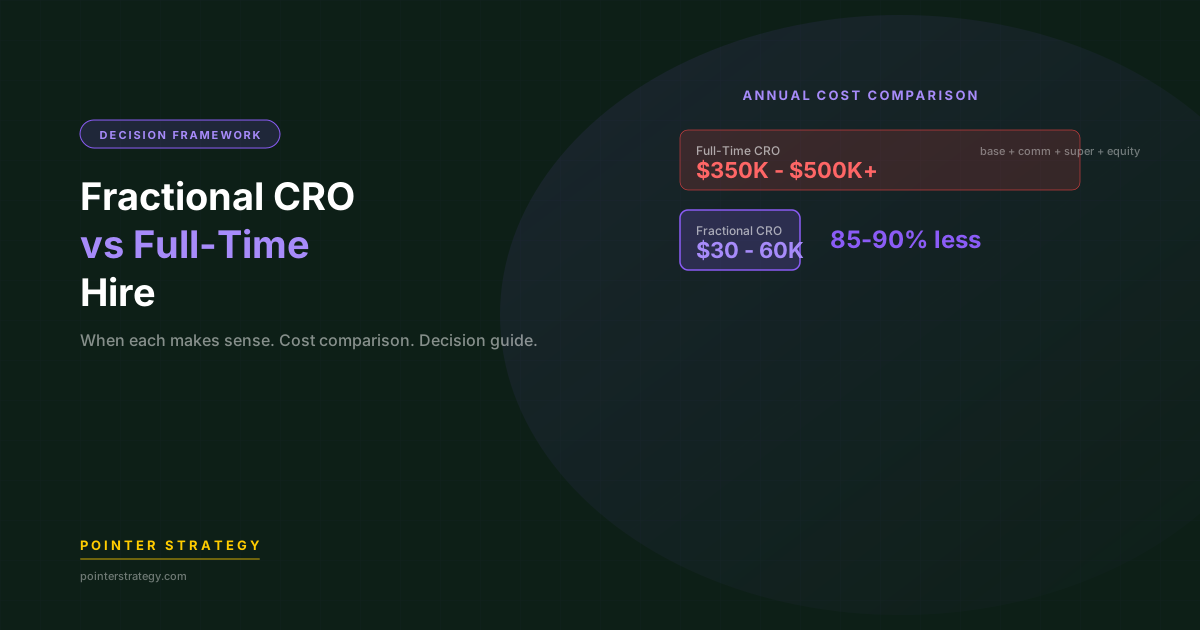
A fractional CRO costs $30,000 to $60,000 per year and works with your team one to three days per week. A full-time CRO costs $350,000 to $500,000+ in total compensation (base, commission, super, equity) and is present five days a week. For companies between $1M and $10M ARR in Australia, the fractional model often delivers better outcomes at a fraction of the cost, because most companies at this stage need strategic direction and process design more than they need another full-time executive.
This guide provides a decision framework for choosing between a fractional and full-time CRO, with cost comparisons, scenario analysis, and the signals that indicate which option fits your situation.
What a Fractional CRO Actually Does
A fractional CRO is an experienced revenue leader (typically with 15+ years of operating experience) who works with your company on a part-time, contracted basis. They are not a consultant who delivers a strategy deck and disappears. They embed with your team, attend leadership meetings, coach your managers, and own revenue strategy.
Typical scope includes:
Typical engagement: 1 to 3 days per week, 6 to 12 month minimum commitment. Monthly retainer of $2,500 to $5,000 depending on days per week and scope.
Learn more about fractional CRO engagements at Pointer.
Cost Comparison: Fractional vs Full-Time
| Cost Element | Fractional CRO | Full-Time CRO |
|---|---|---|
| Base salary / retainer | $30,000 to $60,000/yr | $220,000 to $300,000/yr |
| Commission / bonus | Usually not applicable | $80,000 to $150,000/yr |
| Superannuation (11.5%) | Not applicable (contractor) | $25,000 to $35,000/yr |
| Equity / options | Rarely | 0.5% to 2% typical |
| Benefits (insurance, car, etc.) | None | $10,000 to $30,000/yr |
| Recruitment fee | $0 to $5,000 (intro fee) | $80,000 to $150,000 (retained search) |
| Total Year 1 Cost | $30,000 to $65,000 | $415,000 to $665,000 |
The fractional model costs 5 to 15% of a full-time hire. Even accounting for the reduced time commitment, the cost per strategic output hour is dramatically lower.
What about the reduced hours?
A fractional CRO working two days per week delivers approximately 100 days of focused strategic work per year. A full-time CRO delivers 230+ days, but a significant portion of those days are consumed by internal meetings, administrative tasks, and operational firefighting that could be handled by a sales manager or RevOps person.
For companies under $10M ARR with teams of 5 to 15 reps, 100 focused days of strategic leadership often produces more impact than 230 diluted days.
The Decision Framework: 7 Questions
1. What is your current ARR?
2. How many people report into revenue leadership?
3. Do you have first-line managers in place?
If your sales team reports directly to the CEO or founder, a fractional CRO can build the management layer. If you already have sales managers handling day-to-day operations, a fractional CRO can focus purely on strategy and coaching. If neither exists, you may need a full-time hire who can do both.
4. Is the primary need strategic or operational?
5. How long until you need this capability?
A fractional CRO can start within 2 to 4 weeks. A full-time CRO hire takes 3 to 6 months (search, offer, notice period, onboarding). If you need revenue leadership now, fractional bridges the gap while you search for a permanent hire.
6. Can you afford the downside risk?
A full-time CRO who does not work out costs $400,000+ in total compensation, plus the recruitment fee, plus the opportunity cost of 6 to 12 months of misaligned strategy. A fractional CRO engagement can be wound down with 30 days notice at a fraction of the cost.
7. What does your board or investors expect?
Some investors want to see a CRO title on the org chart. Others care only about revenue performance. If the expectation is optics rather than output, discuss whether a fractional leader can carry an interim CRO title or whether a full-time hire is politically necessary.
When Fractional Wins
Scenario: Series A SaaS company, $2.5M ARR, 4 AEs, founder-led sales
The founder has been closing deals personally but cannot scale. Sales process is informal, no CRM discipline, no forecast rhythm, compensation plan is ad hoc.
A fractional CRO costs $4,000/month ($48,000/year). In the first 90 days, they:
Total investment: $12,000 for 90 days of strategic work. A full-time hire would have cost $100,000+ in the same period (salary, benefits, recruitment fee) and spent half their time in meetings.
Read more about transitioning from founder-led sales.
Scenario: Company exploring ANZ market entry from overseas
A US company wants to test the Australian market before committing to a full-time leader. A fractional CRO with ANZ experience can map the market, identify early customers, build the initial pipeline, and recommend team structure, all for $40,000 to $60,000 over 6 months. This de-risks the market entry decision before a $500,000+ executive hire.
When Full-Time Wins
Scenario: $12M ARR company with 20+ reps across three segments
Revenue operations at this scale require daily attention: pipeline reviews, forecast accuracy, cross-functional alignment with marketing and CS, hiring decisions every month, and board-level reporting. A fractional CRO working two days per week cannot cover this scope. The company needs a full-time executive who can own the entire revenue function.
Scenario: PE-backed company with aggressive 18-month targets
When the growth mandate is 2 to 3x revenue in 18 months, the CRO needs to be deeply operational: restructuring teams, changing compensation plans, upgrading talent, implementing new systems. This requires daily presence and full executive authority.
The Hybrid Path: Fractional First, Full-Time Later
Many successful companies use a staged approach:
This approach costs $30,000 to $50,000 more than going straight to a full-time hire but dramatically reduces the risk of the full-time hire failing. The fractional leader has already validated what works, built the infrastructure, and can help assess whether the full-time candidate is truly right for the environment.
How to Find a Fractional CRO in Australia
The ANZ market for fractional revenue leadership is smaller than the US but growing rapidly. Quality matters enormously because a fractional leader has limited time, so every hour must create leverage.
Where to look:
What to assess:
Check current market rates for sales leadership roles to ensure you are benchmarking correctly.